Two geographies.
One body.
Veldt & Vein is what happens when Korean formulation discipline meets Southern African botanical inheritance. A modern apothecary that treats skin not as a surface to decorate, but as the body's largest organ — and an early, visible signal of how we are ageing.

K-beauty did three things to skincare that no other industry did. It collapsed the gap between cosmetic claim and cosmetic chemistry — South Korean regulators and consumers expect formulators to show their work. It treated texture, finish, and sensorial experience as technical problems, not soft ones. And it built a manufacturing supply chain that is still the most rigorous in the world for new active deployment, microbiome-aware preservatives, and barrier-led formulation.
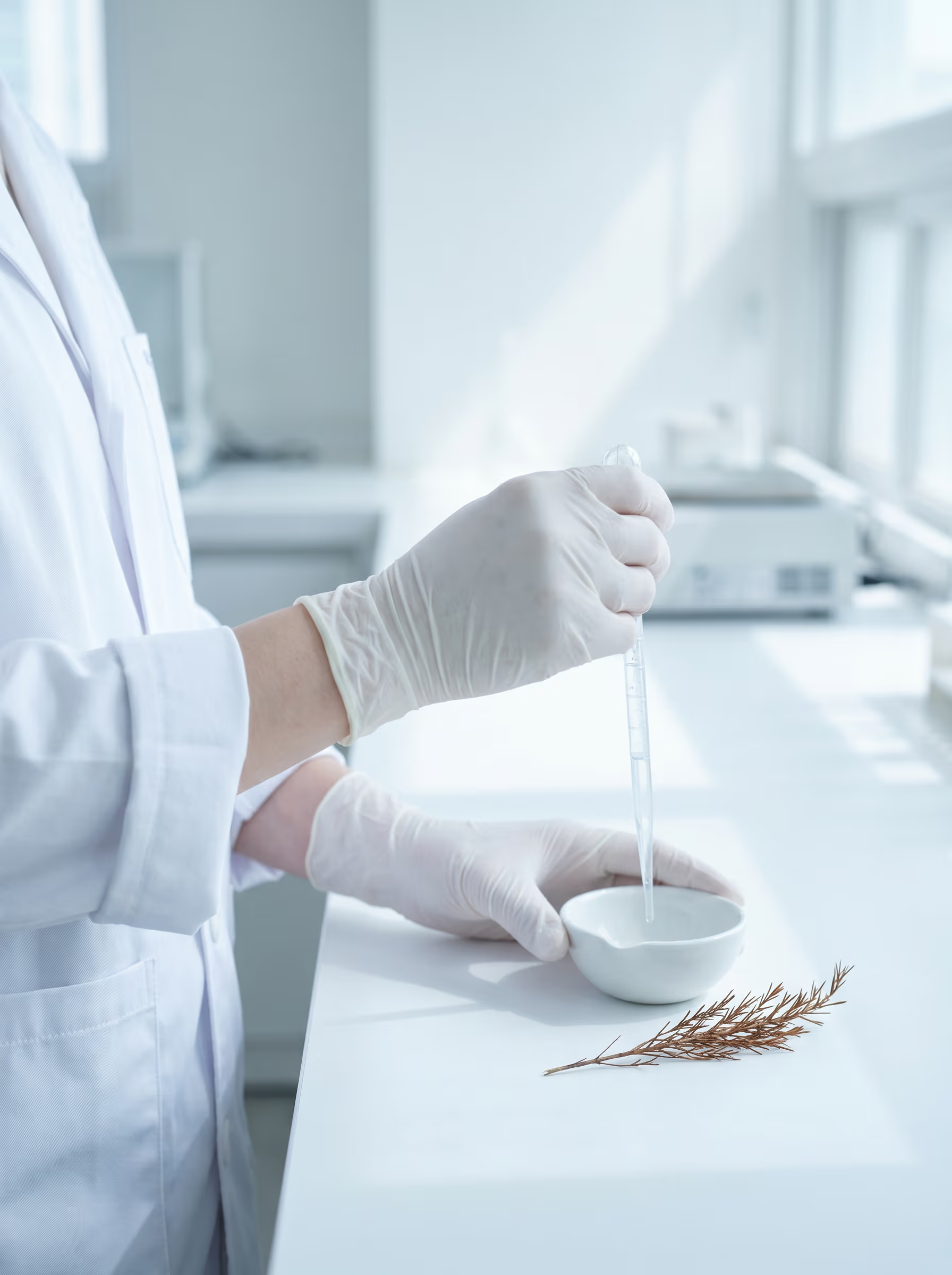
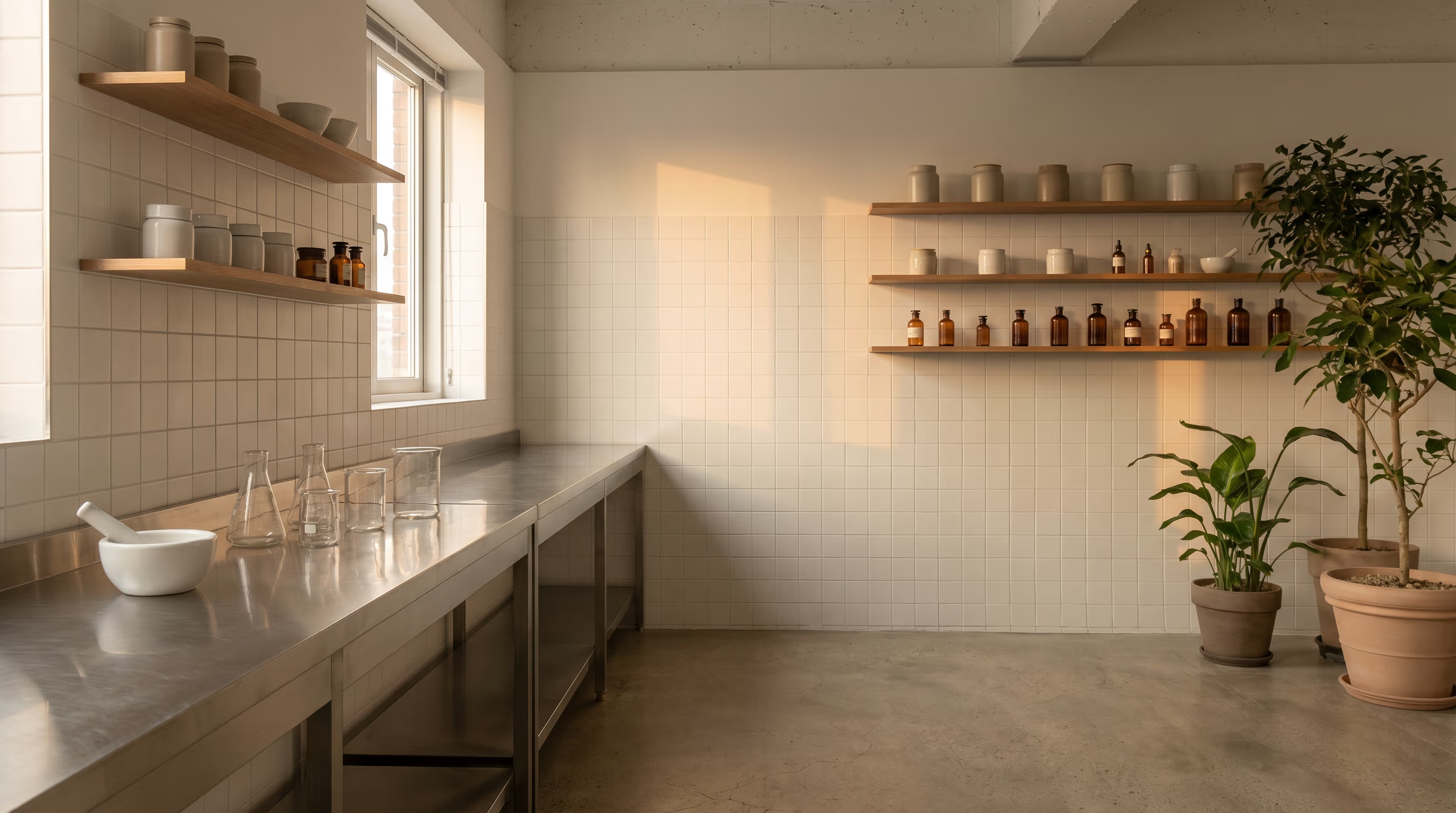
Our formulations are developed in Seoul, with chemists who have spent careers on serum systems, peptide stabilisation, and the tactile economy of how a product feels on skin. That part of the work is not negotiable.

The formulations are developed in Seoul. Every active is chosen because the evidence supports it. Every concentration is set because the science warrants it. Nothing is included for marketing copy.
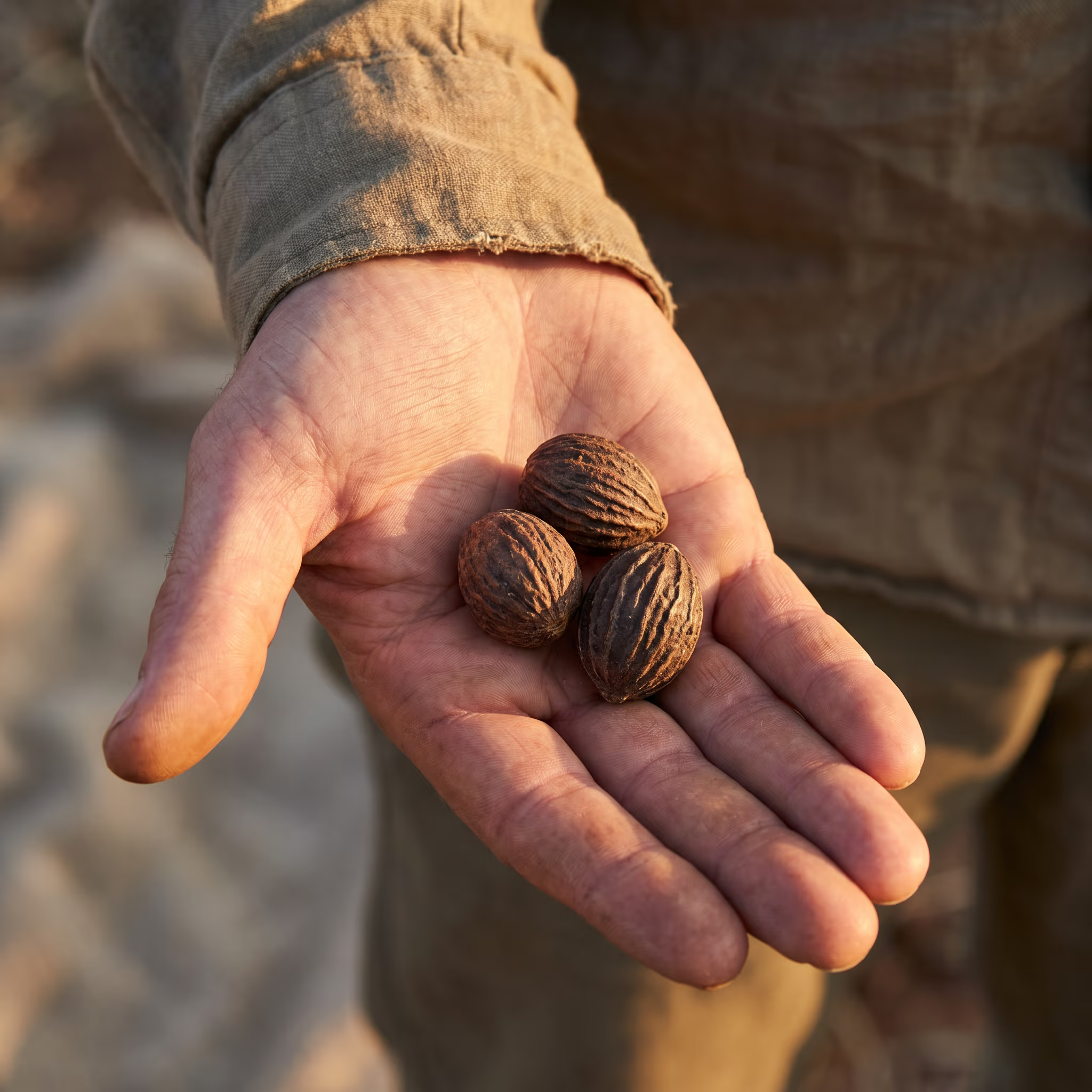
The plants at the centre of every formulation are indigenous to Southern Africa. Marula from the Eudafano Women's Cooperative in Namibia. Rooibos from the high Cederberg. Honeybush from the eastern slopes of the Cape Fold Mountains. Baobab, Cape aloe ferox, devil's claw, fynbos.
We work with these botanicals because their pharmacology is genuinely interesting — peer-reviewed RCT data on marula, antioxidant capacity in honeybush that exceeds green tea, the polysaccharide complexity of aloe ferox. And we work with them under formal Nagoya and NEMBA benefit-sharing agreements with the source communities.
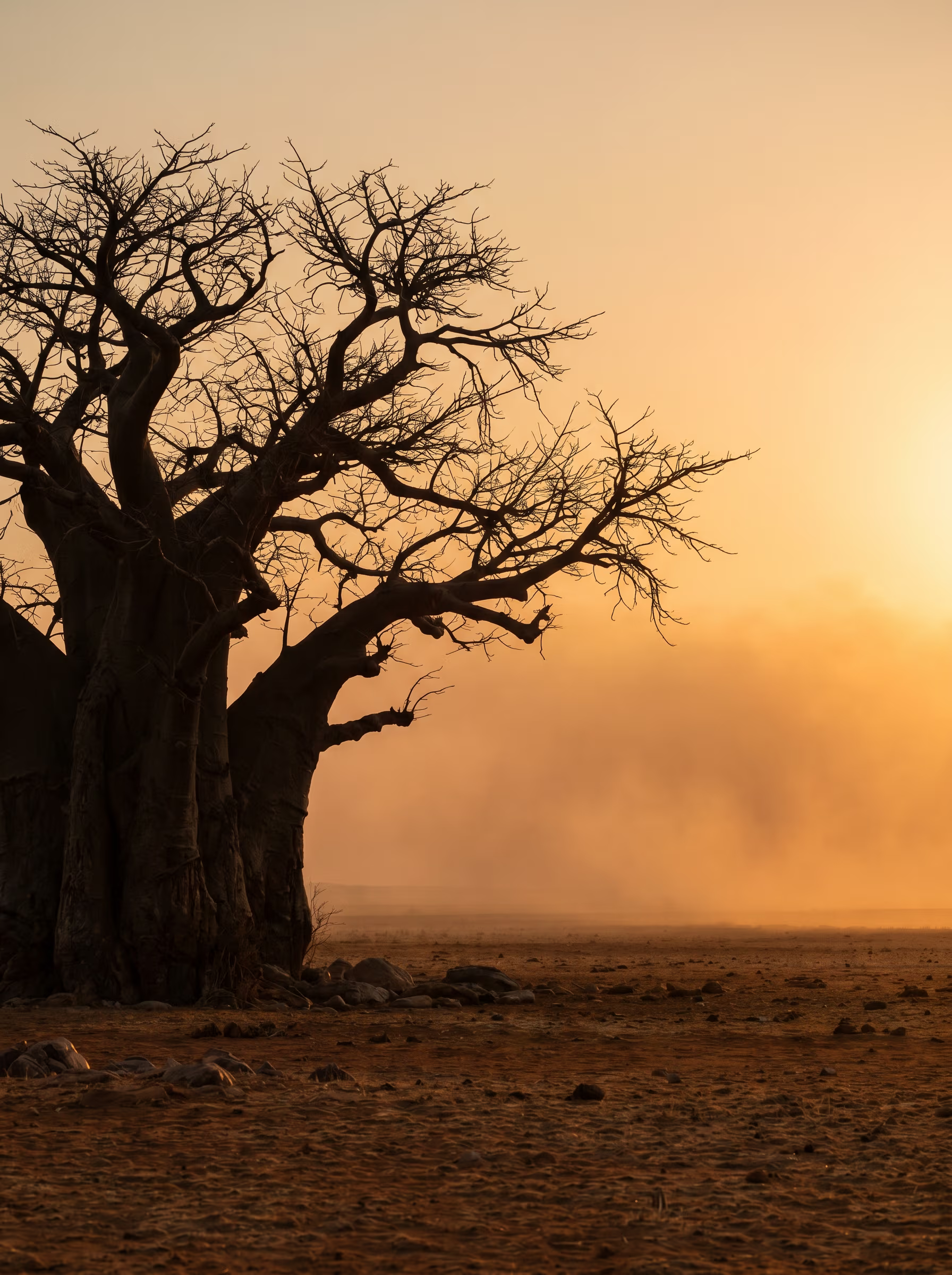
Plants that have been understood by Khoisan, Xhosa, Sotho and Namaqua herbalists for hundreds of generations — and that, until very recently, the cosmetic industry treated as exotic accents rather than primary actives. The communities that have always known these plants are partners, not suppliers.
The traditional cosmetic industry sells the idea that skincare is a beauty problem. We treat skincare as a longevity problem. Skin is the single largest organ in the human body. It is the first place chronic inflammation shows. It is where ageing biology — collagen loss, glycation, oxidative damage, barrier permeability — surfaces months or years before any other organ tells you what is happening underneath.
Our formulations are built around this lens. Peptides at evidence-supported concentrations, not marketing-led ones. Ceramides because the lipid envelope of the skin is the same molecular structure that protects every cell membrane in your body. Antioxidant systems that consider both free radical species and the slower, more boring chemistry of glycation.
The packaging is part of the product. Each formulation lives inside a hand-poured porcelain capsule designed to sit on a bathroom shelf for years, with a refillable inner vessel doing the work of holding the formulation safely.
The capsule is shaped to be confident, not fussy. Dead-straight sides, sharp 90-degree edges, a single horizontal seam line where the lid meets the body. A debossed wordmark deep enough to feel under a fingertip, never deep enough to shout. The colour is the colour of bleached Karoo limestone — Pantone 14-1108.
The brand's name is meant literally. The veld is what grows above ground — sparse, weather-hardened, full of plants that have learned to survive a hard sun. The vein is what runs underneath — the slower currents of mineralogy and groundwater and inheritance.
Both shape the body. Both are what we work from.
Read the founder's letter →