Less harm, shown.
Honest accounting of what we do well and what we don't yet. We don't claim "sustainable" as a feature. We tell you what the inputs are, where they come from, what we're working on, and where the gaps still are.
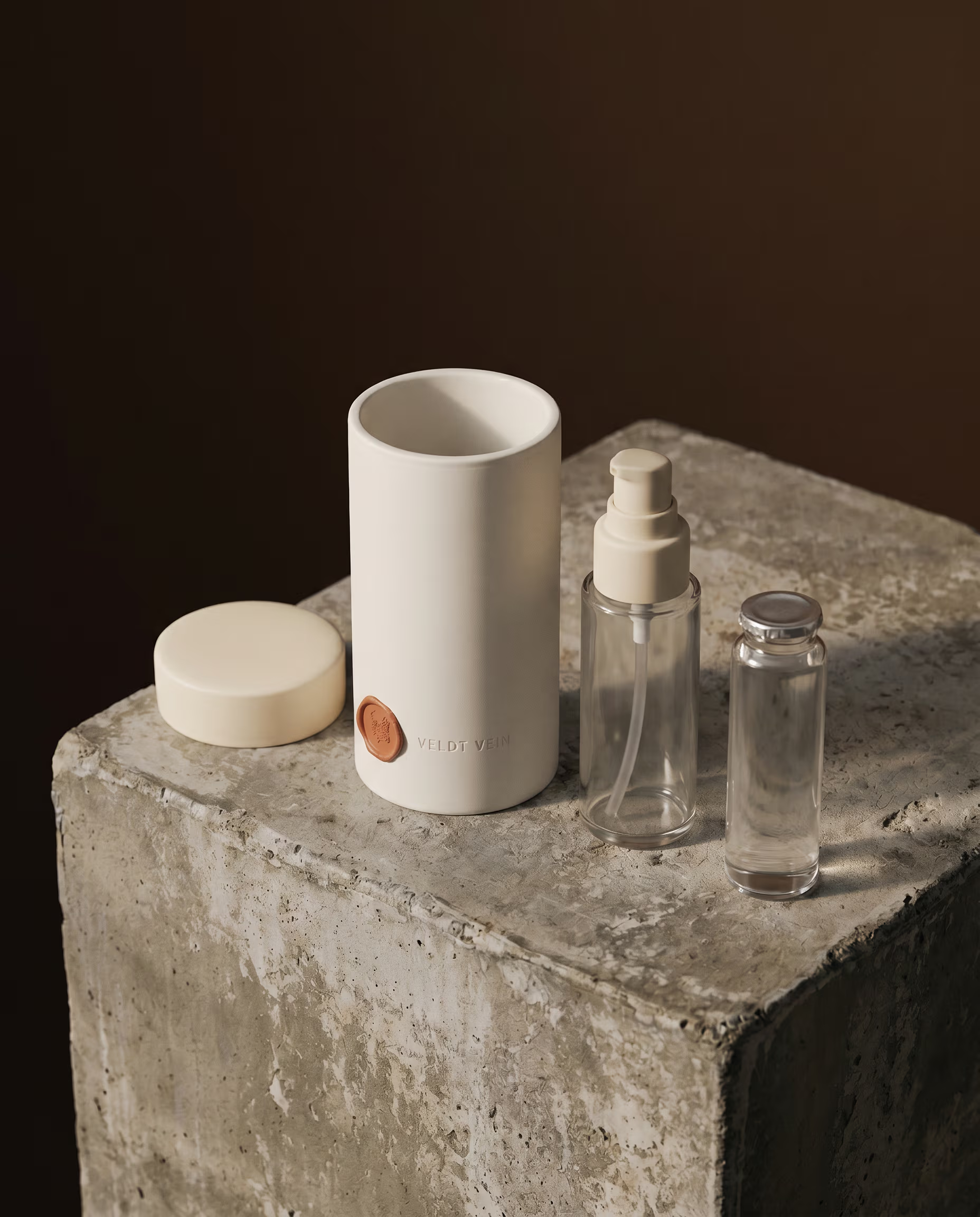
The capsule is built to outlast its contents
The hand-poured porcelain outer capsule is designed to last decades. The refillable inner vessel — the part that actually holds the formulation — is what you replace. Refill packs ship in compostable cellulose-and-paper sleeves, no secondary plastic.
A first refill saves roughly 78% of the per-use packaging weight versus buying a fresh full unit. Across a year of use, the carbon and material footprint per gram of product drops dramatically. We will publish the actual measurements once we have a year of refill data to ground them.
Refills are priced 35–40% below new units. We will not gate refills behind a subscription.
The shipping box does less harm too
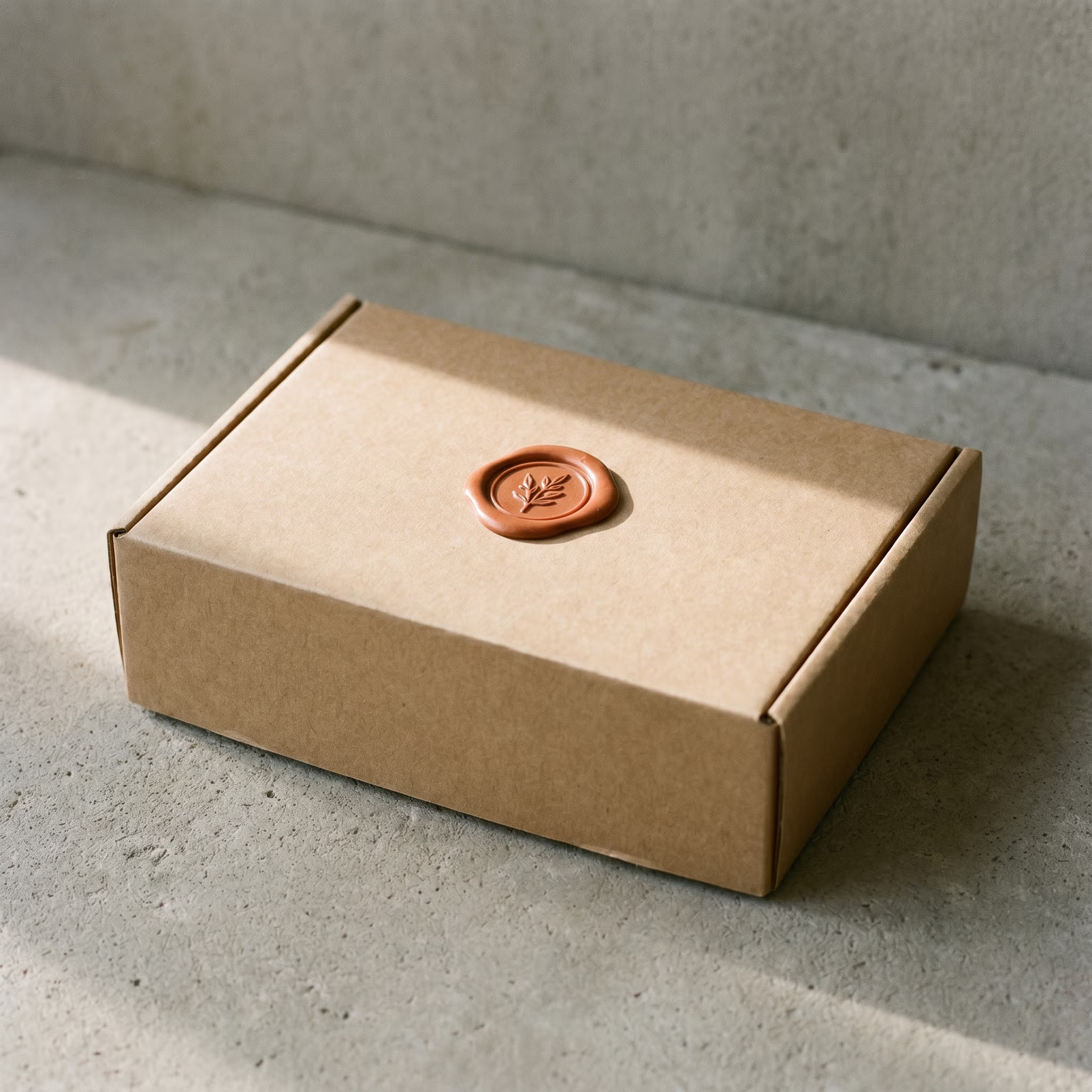
Outer shipping packaging is corrugated cardboard with no plastic filler. We seal boxes with a branded wax seal rather than tape, which eliminates polypropylene entirely from the unboxing experience. The wax is soy-based and compostable.

Indigenous botanicals, formally licensed
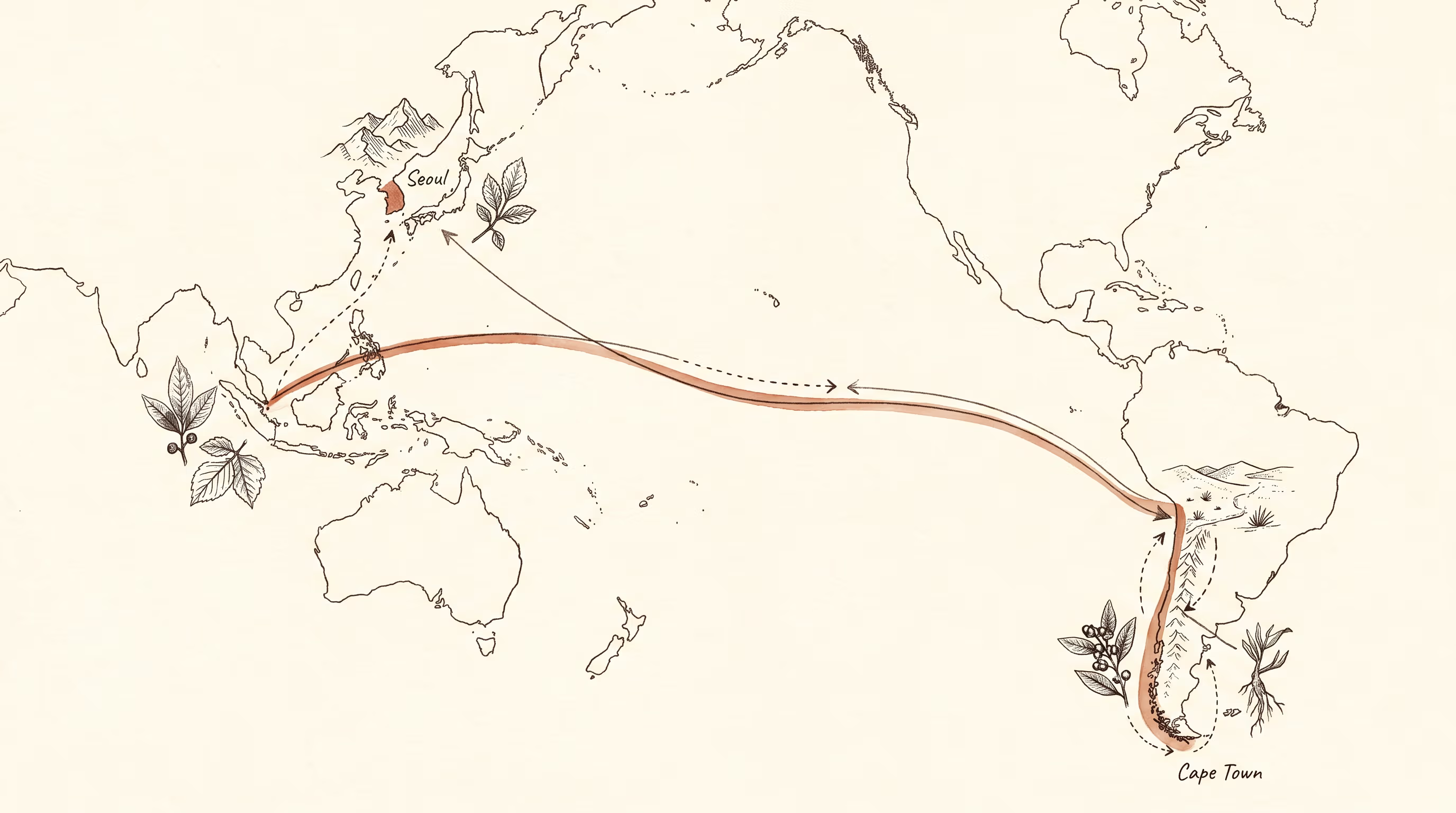
Every Southern African indigenous botanical we use is sourced under either a Nagoya Protocol Access and Benefit-Sharing agreement (for ingredients harvested across borders, like marula from Namibia) or a NEMBA permit (for ingredients harvested within South Africa, like rooibos and honeybush). Both regimes route a defined portion of the commercial value back to the communities of origin.
This isn't decoration. It's the legal and ethical baseline for using indigenous plants in commercial product. The cosmetic industry's track record on this is poor, and we are clear-eyed about that.
For the launch range, our partner organisations include the Eudafano Women's Cooperative (marula, Northern Namibia), the Heiveld Co-op (rooibos, Cederberg), and the Cape Honeybush Tea Company (honeybush, Eastern Cape).
Korea-formulated, K-CGMP standard
Final products are made in Seoul under South Korean Cosmetic Good Manufacturing Practice (CGMP). Batch-level certificates of analysis are available on request for any product, any production run.
The manufacturing carbon footprint is something we measure but do not yet offset. We will publish it as soon as the first full year of production data is in.
The honest gaps
We do not yet operate a take-back programme for empty capsules. We are designing one for year two.
We do not yet ship carbon-neutral. We will, but offsetting at launch volume is not financially possible without raising prices in ways we don't think are honest.
We do not yet have B-Corp certification. We are eligible and pursuing it; the audit process takes 12–18 months.
We are a small brand. We have made trade-offs. We are trying to be specific about which ones.